Paddle Tennis vs Pickleball: Key Differences Explained
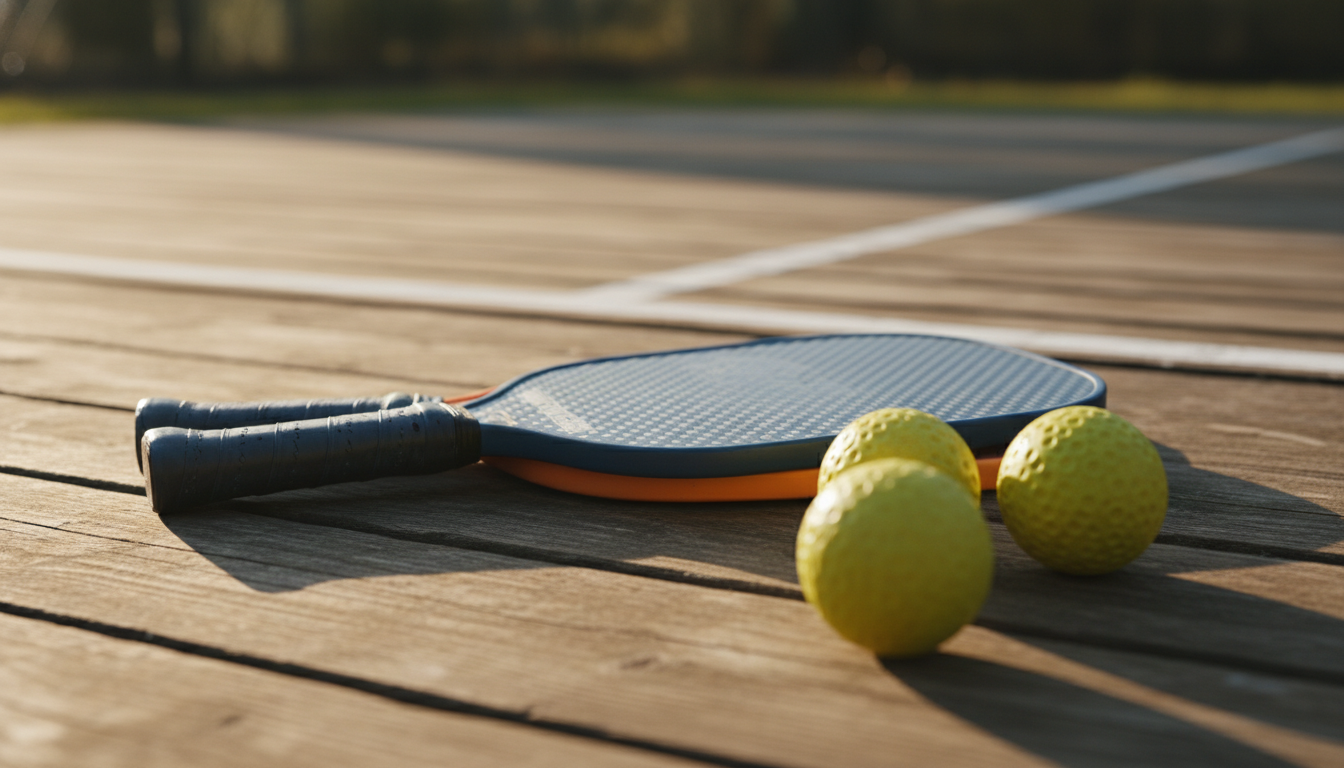
Most people searching this have seen both sports at a park or gym and can’t quite tell them apart. Fair enough. Both use solid paddles, both play on smaller courts than tennis, and both attract players who want something more accessible than the full game. But they’re genuinely different sports with different equipment, rules, and feels.
Here’s how they actually compare.
The Basic Setup
Paddle tennis (sometimes called padel tennis, though padel is technically its own separate sport) is played on a depressurized tennis ball with a solid, perforated paddle on a court that’s roughly 50 feet by 20 feet. The net is lower than standard tennis. Serves are underhand or sidearm depending on the variant. The game follows tennis scoring with deuce and advantage.
Pickleball uses a plastic wiffle-style ball, a composite or graphite paddle, and a court that’s 44 feet by 20 feet. The net sits at 34 inches at the center. Scoring runs to 11 (win by 2), and only the serving side can score points. There’s also the kitchen, a 7-foot non-volley zone at each end of the net that has no equivalent in paddle tennis.
Equipment Differences
The paddles are where things diverge most noticeably. Paddle tennis paddles are typically shorter and thicker, made from foam or graphite composites, and have a perforated face to reduce wind resistance. They tend to feel more like a miniature tennis racket in terms of weight and swing style.
Pickleball paddles are thinner, wider-faced, and made from a broader range of materials. Raw carbon fiber, fiberglass, and polymer honeycomb cores are standard. Something like the Joola Ben Johns Hyperion CFS 16 or the Selkirk Vanguard Power Air would be completely out of place in paddle tennis. The tech race in pickleball equipment has outpaced paddle tennis by a wide margin.
The balls are also meaningfully different. Paddle tennis uses a low-compression tennis ball. Pickleball balls are hollow plastic with holes, which creates a completely different flight path and bounce behavior. Outdoor pickleball balls (harder, fewer holes) fly straighter and faster. Indoor balls are softer with more holes and a more unpredictable spin response.
Court and Play Style
Paddle tennis allows a single bounce off the back wall in some formats, which changes strategy and rally length considerably. That wall element adds a squash-like dimension. Pickleball has no walls.
Pickleball play tends to favor patience and placement over power, especially at the net. The kitchen rule forces players into a soft game around the net, with dinking exchanges that can last 20+ shots. Getting comfortable at the kitchen line is the single biggest skill gap new players face.
Paddle tennis rewards a more aggressive, tennis-influenced game. Players with a tennis background often find the transition to paddle tennis smoother at first. The swing mechanics translate more directly.
That said, many former tennis players report that pickleball’s learning curve is actually shorter for basic competency. Picking up a Paddletek Bantam EX-L and getting into a rally within 20 minutes is a common experience. Getting to competitive pickleball is another story.
Popularity and Availability
Pickleball is not close to paddle tennis in terms of participation numbers in the United States. The Sports & Fitness Industry Association has consistently tracked pickleball as one of the fastest-growing sports in the country, with dedicated courts now appearing in public parks, gyms, and retirement communities at a pace that paddle tennis hasn’t matched.
Paddle tennis still has strong regional pockets, particularly in California and parts of the Northeast. But the court availability gap is significant. If you’re looking for regular games with strangers, pickleball almost always wins on logistics alone.
The community around pickleball is also larger online and in local clubs. Finding pickup games, leagues, and clinics is easier. That social layer matters more than people admit when choosing a sport to actually stick with.
Which One to Pick
If you have a strong tennis background and access to paddle tennis courts nearby, paddle tennis may feel like a natural fit. The scoring, footwork, and swing mechanics overlap enough that you’re building on existing muscle memory.
If you’re newer to racket sports, or if you want the larger player pool and more gear options, pickleball is the practical choice. The equipment options are wider (budget entry points start around $40 with something like the Onix Z5 Graphite, competitive paddles run $150–$250), and the court access is better in most cities.
One more thing worth considering: the depth of the competitive pathway. USA Pickleball sanctions tournaments at every level from 3.0 amateur to pro. Paddle tennis has a competitive scene but a much smaller one.
Bottom line: These are two distinct sports that happen to use similar equipment. Pickleball has the larger community, more gear innovation, and better court access in most areas. Paddle tennis offers a tennis-adjacent feel that some players prefer. Pick based on what’s available near you and which play style sounds more appealing.